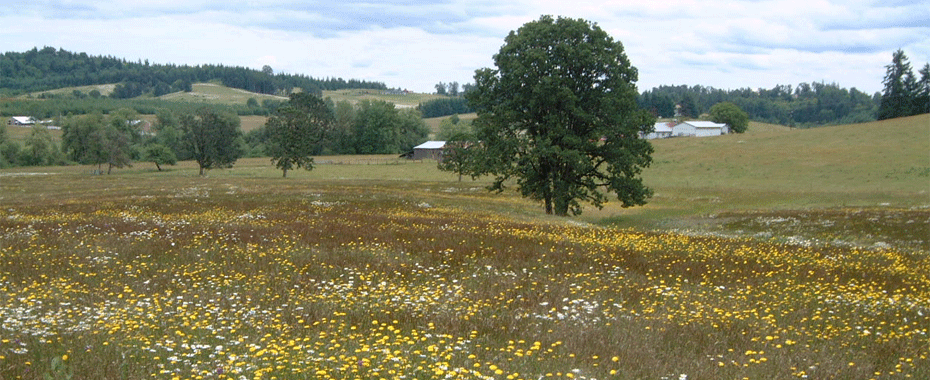
Wildlife on Working Landscapes
Agriculture and forestry are major features of Oregon’s landscape and its economy. Farms and managed forests provide critical habitat for a number of rare or endangered species in Oregon. In addition, many landowners are attempting to become more wildlife-friendly to increase their sustainability, develop a marketing edge, or simply because they value wildlife.
The Oregon Wildlife Institute assists landowners by conducting research on wildlife conservation and damage management in working landscapes, providing outreach information, and developing conservation plans to enhance the value of these lands to wildlife.
Selected Publications
Testing sign indices to monitor voles in grassland and agriculture. Gervais, Jennifer A. 2010. Northwest Science 84:281-288.
Vesely, D.; McComb, B.C.; Vojta, C.D.; Suring, L.H.; Halaj, J.; Holthausen, R.S.; Zuckerberg, B.; Manley, P.M. 2006. Development of Protocols To Inventory or Monitor Wildlife, Fish, or Rare Plants. Gen. Tech. Rep. WO-72. Washington, DC: U.S. Department of Agriculture, Forest Service. 100 p.
The ecology of burrowing owls in the agroecosystem of the Imperial Valley, California. Rosenberg, Daniel K., and Katherin L. Haley. 2004. Studies in Avian Biology 27:120-135.
Guide to Conserving Wildlife on Willamette Valley Farms. Vesely, David G. 2011. A guide to conserving wildlife on Willamette Valley farms. Oregon Wildlife Institute, Corvallis, OR